Children and Pregnant Women
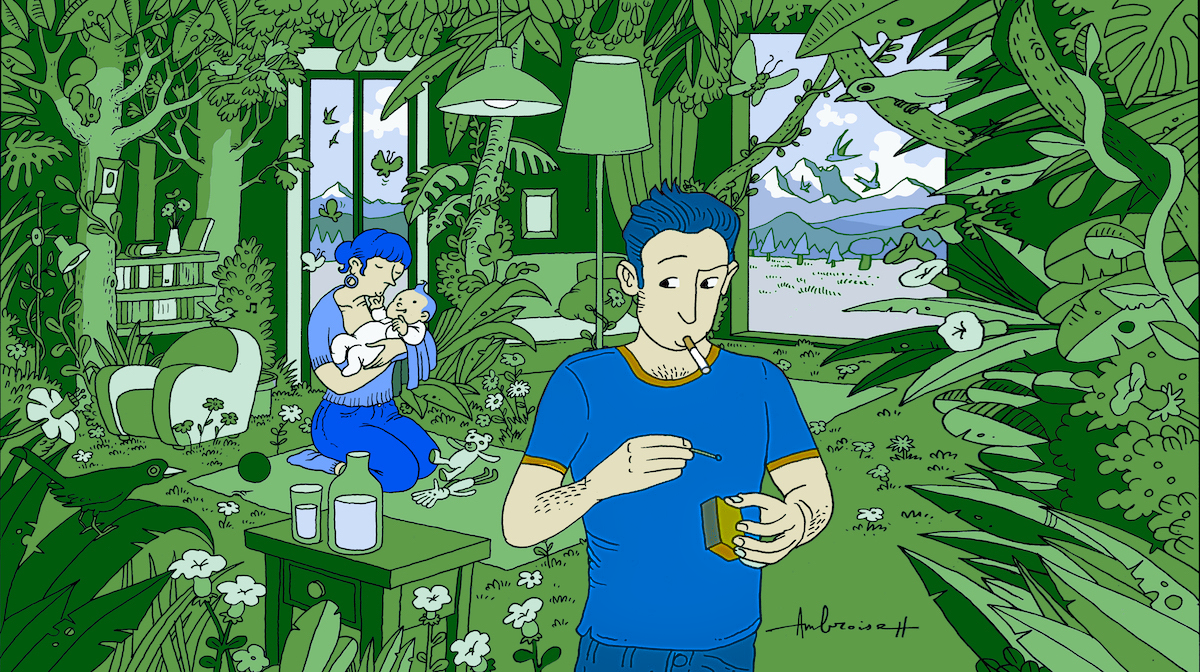
Whether at home, in the car, outdoors, or due to environmental residues, any form of secondhand smoke is harmful. Pregnant women and young children are at particular risk. Children and unborn babies are more vulnerable because their lungs are still developing, they breathe more rapidly, and their immune systems are immature. Secondhand smoke increases the risk of asthma, respiratory infections, allergies, behavioural or psychological issues, low birth weight, and pregnancy complications. The only effective protection for pregnant women and children is a 100% smoke-free environment—at home, in the car, and in all enclosed or shared spaces.
Why is smoke particularly dangerous for children?
Children are particularly sensitive to tobacco smoke because their bodies are still developing and their ability to eliminate toxic substances is limited. Compared to adults, they absorb more harmful substances through breathing, and their organs—particularly the lungs and immune system—are not yet fully developed. Even small amounts of smoke can have significant effects on their health.
Their airways are also narrower and more sensitive, making them more vulnerable to airborne irritants. Even small amounts of pollutants can trigger severe respiratory problems in children. As their bodies are still growing, absorbed toxins can disrupt normal development and cause long-term damage.
However, it is not just their physical development that increases their risk; the typical behaviour of young children plays a part as well. Toddlers often crawl on the floor, play on carpets or furniture, and frequently put their hands or objects into their mouths. In doing so, they come into direct contact with hazardous smoke residues—known as thirdhand smoke. These residues settle on surfaces, furniture, and everyday objects, posing an invisible yet very real danger.
What can you do?
What can families do?
- Ensure that all indoor spaces are 100% smoke-free, including your home and car. Smoking with a window open or in another room is also harmful to others.
- Avoid exposing children to people who smoke. Politely ask guests not to smoke in your apartment or near your child
- After smoking, change your clothes and wash your hands before coming into contact with children or pregnant women. Smoke particles cling to skin, hair, and clothing (thirdhand smoke).
- Ventilate regularly and use air purifiers, even though these measures do not fully replace a smoke-free environment.
What can children do (with the help of an adult)?
- Speak up: Older children can learn to politely ask adults not to smoke around them.
- Avoid smoky environments: Children should stay away from places where smoking occurs, such as certain parks, building entrances, or the homes of friends where people smoke.
- Talk to someone who can be trusted: If people are smoking at home and it is affecting their own health or wellbeing, children should speak to a trusted adult or teacher.
- Maintain good hygiene practices: After spending time in smoke-polluted environments, it is helpful to wash your hands and change your clothes to reduce exposure to thirdhand smoke.
What can pregnant women do?
- Avoid contact with smokers as much as possible: politely ask others not to smoke around you, or move away—your health and your baby’s development depend on it.
- Talk to your doctor: Inform your healthcare professional if you regularly spend time in environments exposed to smoke. They can provide support and offer appropriate assistance.
- Choose smoke-free public places: Opt for smoke-free cafés, restaurants, and parks.
- Use masks and regular ventilation as a final protective measure: If smoke pollution cannot be completely avoided, wearing a high-quality mask (e.g. FFP2) and ensuring intensive ventilation can at least reduce exposure.
What can healthcare professionals do?
- Physicians and other healthcare professionals should ask specific questions about secondhand smoke exposure during routine check-ups, particularly with pregnant women and children.
- Provide advice and support services for smoking cessation, particularly for smokers in households with highly vulnerable individuals.
- Educate families about the dangers of secondhand and thirdhand smoke—many are unaware of the risks or underestimate them.
- Integrate education on tobacco smoke exposure into childbirth preparation classes and pediatric check-ups.
What are the risks to children’s health?
Children’s high sensitivity to tobacco smoke has significant health consequences. Here are the risks associated with even brief, indirect exposure to smoke:
Respiratory diseases and antenatal effects
Even indirect exposure to tobacco smoke increases the risk of numerous pathologies in children. Many of these can develop during the fetal stage. Respiratory diseases are among the most serious consequences.
Exposure while in the womb can impair lung development and increase the risk of asthma later in life. After birth, these children are more prone to bronchitis, pneumonia, and asthma attacks. This risk is particularly high during the first two years of life, a crucial period for lung development. Secondhand smoke has also been linked to an increased risk of sudden infant death syndrome (SIDS), especially during the first few months, when the respiratory system is particularly fragile.
Effects on oral health
The respiratory tract is not the only area affected; oral health is too. Children exposed to tobacco smoke, even with good dental hygiene, are at an increased risk of cavities.
Furthermore, smoke weakens the immune system, making children more vulnerable to infections. They suffer more frequently from bacterial infections (e.g. streptococcus) and even when vaccinated they can contract certain viral infections (such as measles) in a mild form
Ear, nose, and throat (ENT) disorders are also more common, such as voice disorders (dysphonia) that can affect language development and communication.
These health problems directly affect children’s wellbeing and quality of life.
Psychological and behavioural effects
The consequences of smoke are not limited to physical health. Smoke can also impact children’s mental health.
Increased exposure has been linked to a higher risk of ADHD (attention deficit disorder with or without hyperactivity), emotional overload, heightened stress, and even suicidal ideation.
Children with high levels of exposure more frequently exhibit aggressive behaviour and academic difficulties, and, as they grow older, show a more pronounced tendency toward risky behaviour.
Risks during pregnancy
Exposure to tobacco smoke during pregnancy can seriously affect fetal development.
It increases the risk of low birth weight, miscarriage, premature birth, and even fertility problems. Complications such as placental disorders are also more common.
The risk of miscarriage is even higher in cases of vitamin D deficiency in mothers exposed to smoke.
Long-term risks
Beyond the immediate consequences during childhood, long-term effects are also possible.
Secondhand smoke increases the risk of cardiovascular disease or certain cancers—particularly lung cancer—later in life. The earlier exposure begins, the more serious the consequences can be.
To learn more :
If you would like to know more about this topic, you can find in-depth content in the following resources:
- Del Ciampo, L. A. & Del Ciampo, I. R. L. (2014). Passive Smoking and Children’s Health. Health, 6(12), 1408–1414. https://doi.org/10.4236/health.2014.612172
- Hofhuis, W., de Jongste, J. C. & Merkus, P. J. (2003). Adverse health effects of prenatal and postnatal tobacco smoke exposure on children. Archives of Disease in Childhood, 88(12), 1086–1090. https://doi.org/10.1136/adc.88.12.1086
- Pugmire, J., Sweeting, H. & Moore, L. (2017). Environmental tobacco smoke exposure among infants, children and young people: Now is no time to relax. Archives of Disease in Childhood, 102(2), 117–118. https://doi.org/10.1136/archdischild-2016-311652