Advice for minimising exposure
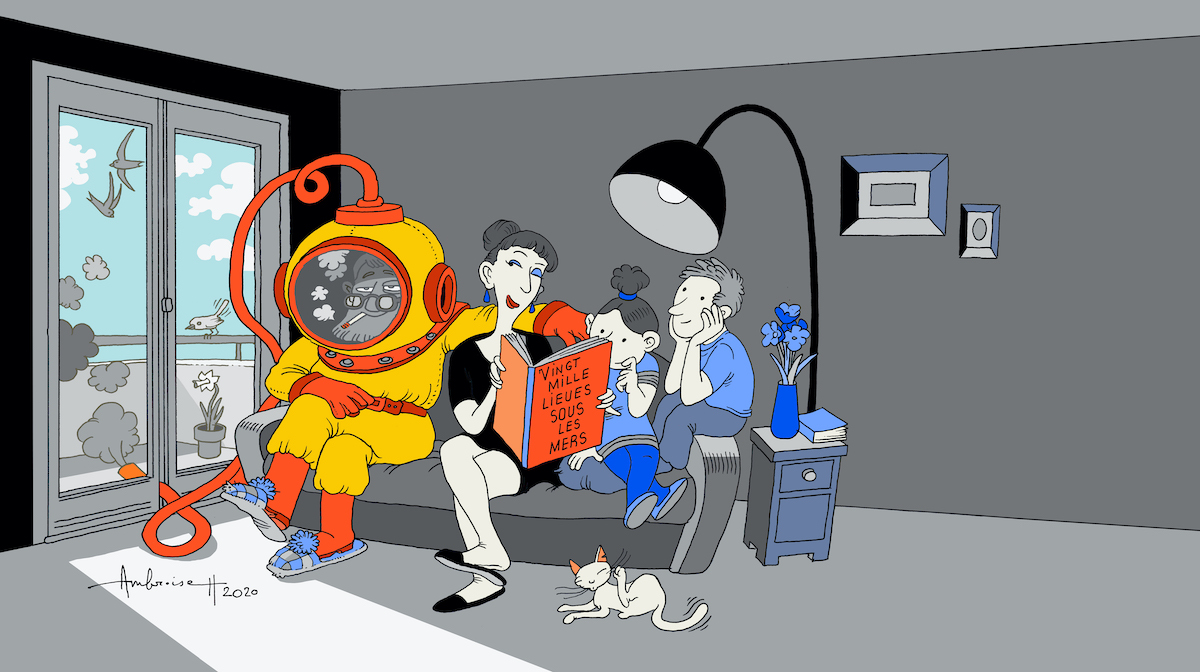
Secondhand smoke is present everywhere: in homes, cars, playgrounds, and workplaces. Even if you do not smoke yourself, you can be exposed to smoke residues in the air or on surfaces. These invisible particles contain over 7,000 chemical substances, at least 70 of which are carcinogenic. Secondhand smoke increases the risk of respiratory diseases, cardiovascular disorders, and even cancer.
Discover practical tips here on how to effectively protect your health and that of your loved ones from secondhand smoke.
Download the PDF and find out how to protect yourself effectively—at home, in the car, or on the go.
Whether you smoke or not, secondhand smoke affects us all. Get the facts now!
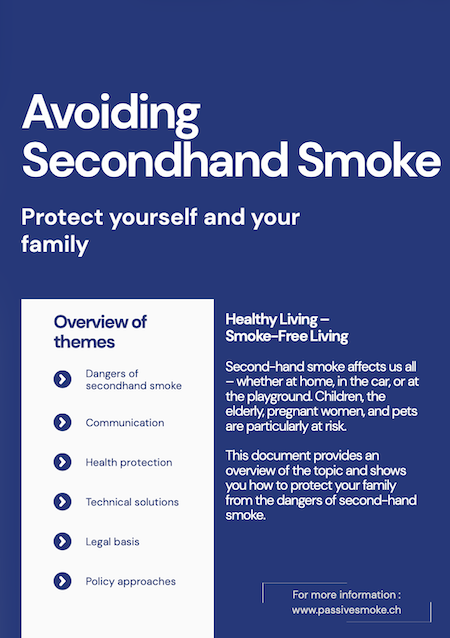
The document contains important information on the following topics:
- Dangers of secondhand smoke
What is secondhand smoke, how is it formed, and what are the health risks? - Communication
Tips for talking to the people around you who smoke in your immediate environment. - Health protection
Concrete measures to protect your family, especially vulnerable individuals.
- Technical solutions
Use of HEPA air filters as an additional measure against fine particles. - Legal basis
Overview of your rights and the applicable legislation in Switzerland. - Policy approaches
How smoking bans and legal regulations improve public health.
- Dangers of secondhand smoke
What is secondhand smoke, how is it formed, and what are the health risks? - Communication
Tips for talking to the people around you who smoke in your immediate environment. - Health protection
Concrete measures to protect your family, especially vulnerable individuals. - Technical solutions
Use of HEPA air filters as an additional measure against fine particles. - Legal basis
Overview of your rights and the applicable legislation in Switzerland. - Policy approaches
How smoking bans and legal regulations improve public health.