
Infiltration of smoke into homes
Do you smell smoke in your apartment even though no one in your home smokes? Cigarette smoke (or smoke from other substances) may be seeping in from another unit or a common area. Unfortunately, this is a common occurrence, especially in older or poorly insulated buildings.
E-cigarette smoke or aerosols can enter your home through various routes, often invisible at first glance. Here, we outline the main pathways of infiltration, the risks associated with this secondhand exposure in your living space, and potential solutions to address the issue.
How smoke seeps into your home
Smoke can travel through a multitude of small openings in buildings. Here are a few examples:
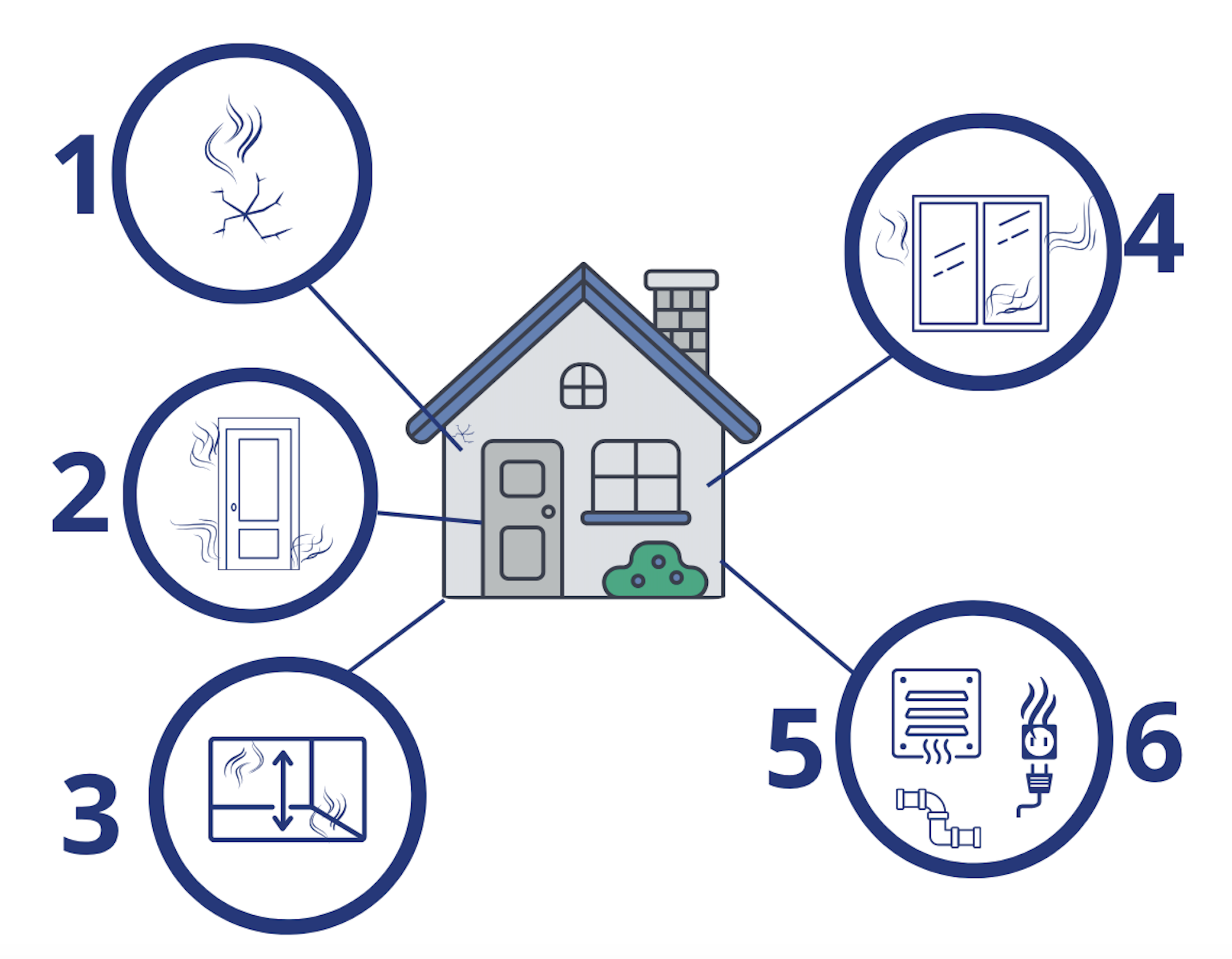
1. Cracks in walls, floors, or ceilings
2. Door gaps: particularly entry doors, which often open onto hallways where smoke can circulate.
3. Ceilings and floors: in older buildings, partitions between apartments are not always airtight. Materials like wood allow more air to pass through.
4. Windows: if poorly sealed or left partially open, they can let in smoke from a neighbour or the street.
5. Ventilation and air circulation systems: a shared duct can carry smoke between multiple units.
6. Electrical outlets, cable conduits, and piping: these all serve as pathways connecting different apartments or floors.
Note: the older the building—or the less insulation used in its construction materials—the more likely it is to allow smoke to pass through.

From secondhand smoke to thirdhand smoke
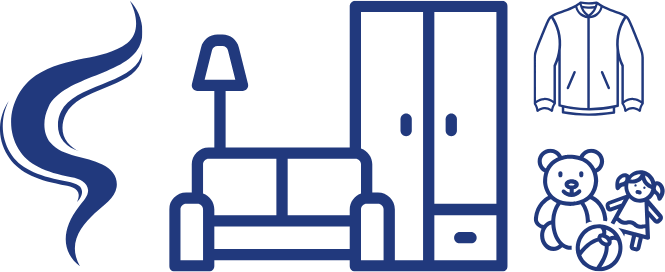
People often speak of secondhand smoke (smoke exhaled by the smoker or resulting from the burning of the cigarette) and thirdhand smoke (smoke absorbed by surfaces—walls, fabrics, furniture—and subsequently released into the ambient air).
Even after the source is gone, smoke can linger in your home (thirdhand smoke):
- It permeates everything—curtains, carpets, walls.
- It can come back through the ventilation ducts.
- It contributes to chronic indoor pollution that is difficult to eliminate.
Consequently, airing out the apartment is not enough; thirdhand smoke can linger there for a long time.
Is this indoor pollution dangerous to health?
You may have experienced headaches, nausea, or irritation of the eyes, nose, and throat; these are direct effects, but there is also an increased risk of cardiovascular issues (such as heart attacks), respiratory problems, and cancer. Chronic exposure, in particular, raises the risk of lung cancer, even if you do not smoke.
Consequently, the secondhand smoke that has seeped in poses a genuine health risk. Fortunately, there are ways to improve the situation. We outline some approaches below, and you will find practical solutions in the following sections:


Solutions: some options
To address this smoke infiltration, several measures can be considered:
1/ Identify the sources
Locate the areas where the smoke is entering.
If you are unable to do so, do not hesitate to call in a specialist company.

2/ Improve airtightness
Install weatherstripping around windows and doors.
Caulk outlets, switches, cracks, and pipe penetrations.
Install door sweeps.
Again, you can hire a professional company if needed.
3/ Use controlled ventilation
Use of an air purifier with a HEPA (High-Efficiency Particulate Air) filter and an activated carbon filter.
4/ Communication with the neighbours
Dialogue is often the first step. Many smokers don’t realise that their smoke is seeping into neighbours’ homes.

5/ Legal or administrative actions
Contact your landlord or property management company to report the nuisance.
If no action is taken, turn to a mediation service or your tenants’ association, or even initiate legal proceedings.

Sources:
- Dacunto, P. J., Cheng, K.-C., Acevedo-Bolton, V., Klepeis, N. E., Repace, J. L., Ott, W. R., & Hildemann, L. M. (2013). Identifying and quantifying secondhand smoke in multiunit homes with tobacco smoke odor complaints. Atmospheric Environment, 71, 399‑407. https://doi.org/10.1016/j.atmosenv.2013.02.018
- OFSP, O. fédéral de la santé publique. (2023). Lutte contre le tabagisme passif : Les avancées. https://www.bag.admin.ch/bag/fr/home/strategie-und-politik/politische-auftraege-und-aktionsplaene/politische-auftraege-zur-tabakpraevention/tabakpolitik-schweiz/schutz-vor-passivrauchen.html
- Repace, J. L. (2024). Secondhand smoke Infiltration in multiunit housing : Health effects and nicotine levels. Indoor Environments, 1(2), 100013. https://doi.org/10.1016/j.indenv.2024.100013